
Lithium battery separators are the core isolation and protection component between the positive and negative electrodes of a battery, directly determining the safety performance of power batteries, and are also a key barrier to preventing battery thermal runaway. Conventional polyolefin lithium battery separators have limited heat resistance; when the ambient temperature rises to around 130°C, they undergo obvious thermal shrinkage, which can easily cause direct contact between the positive and negative electrodes of the battery, trigger internal short circuits, and then lead to thermal runaway safety accidents such as fire and explosion.
As safety standards for new energy vehicles continue to escalate, relying solely on traditional separator substrates can no longer meet strict fire safety requirements. At present, constructing a high-performance flame-retardant coating on the separator surface is the mainstream and efficient technical path to improve lithium batteries' high-temperature resistance, flame resistance, and thermal runaway prevention, and is also an urgently needed solution for industrial commercialization.
I. Flame-Retardant Mechanism and Application Value of Conventional MCA Flame Retardants in Separators
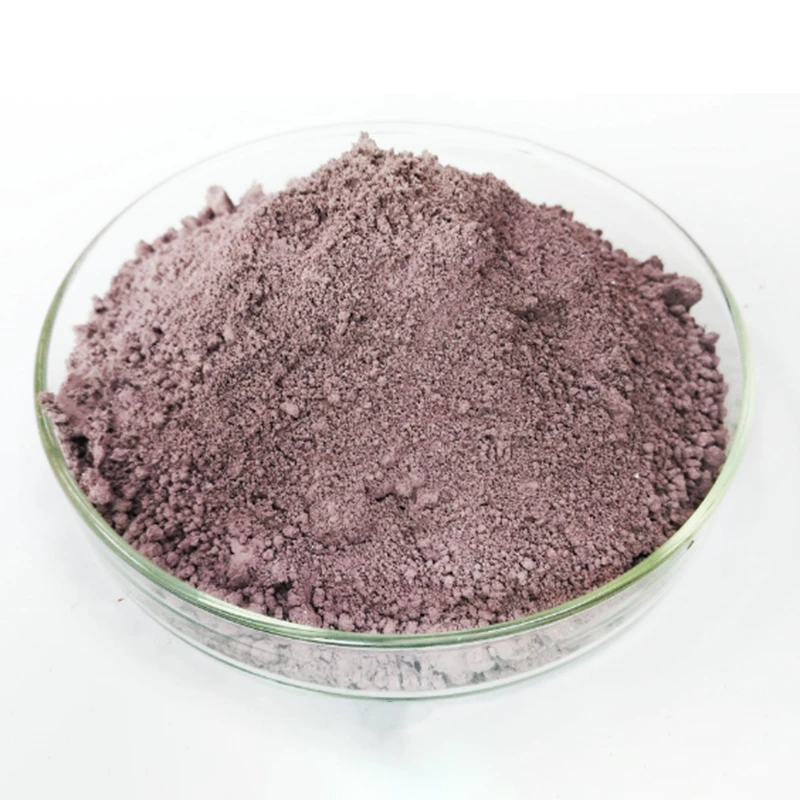
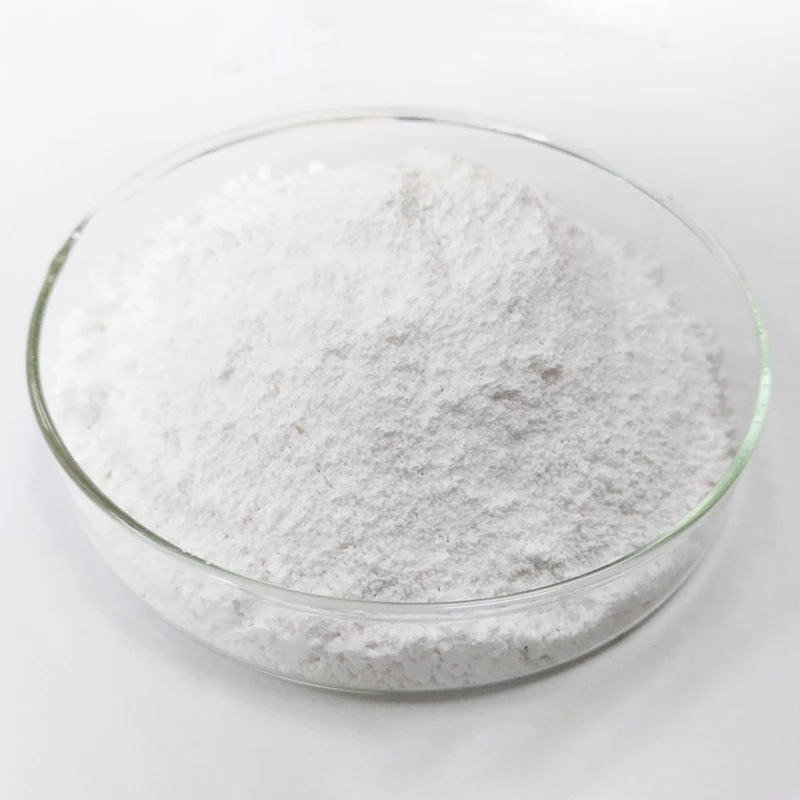
Melamine cyanurate (MCA) is an eco-friendly halogen-free nitrogen-based flame retardant and a low-cost hydrogen-bonded organic framework (HOF) functional material. With excellent flame retardancy, compatibility, and stability, it is widely used in the field of lithium battery separator modification.
MCA coating can greatly improve the thermal stability and flame-retardant performance of lithium battery separators, and can still effectively block the risk of battery short circuits under high-temperature conditions. Its core flame-retardant advantage is the dual synergistic effect of condensed-phase char layer barrier + gas-phase flame retardancy. When heated at high temperature, MCA can catalyze the rapid dehydration and carbonization of the separator polymer, forming a dense and stable protective char layer on the material surface, isolating external heat and oxygen permeation; at the same time, it releases inert gases such as nitrogen, diluting the concentration of internal combustible gases and inhibiting flame spread from the root. Unlike traditional flame-retardant materials, MCA has unique supramolecular characteristics and can construct a high-quality physicochemical microenvironment during electrolyte ion transport, achieving high flame retardancy without sacrificing the electrochemical performance of lithium batteries. Relevant experimental data confirm that nickel-rich cathode lithium batteries modified with MCA coating can still maintain 90.3% capacity after 300 cycles at a 1.0C rate, combining safety and endurance stability.
II. Core Upgrading Advantages of Nanoscale MCA Compared with Conventional MCA
After refining MCA powder to the nanoscale, it completely breaks through the application shortcomings of conventional micron-scale MCA, achieving all-round upgrades in flame-retardant efficiency, dispersibility, and adaptability, perfectly meeting the high-precision and high-stability usage requirements of lithium battery separators.
Nanoscale MCA has an ultra-fine and uniform particle size and can achieve directional and orderly arrangement in the separator flame-retardant coating. When the battery faces the risk of thermal runaway, it can quickly absorb heat and cool down, forming a uniform and dense nanoscale thermal protection barrier. Compared with conventional MCA, the nanoscale product has a greatly increased specific surface area, and its catalytic char-forming efficiency is increased by 40%. With a lower addition amount, it can achieve a higher level of flame-retardant protection, effectively solving the fire and deflagration problems caused by lithium battery thermal runaway.
Current industry-leading technology can produce nano hexagonal platelet MCA with an average particle size below 0.3 μm; the product has regular and uniform morphology, high surface activity, and excellent dispersion, making it a preferred core raw material for flame-retardant coatings on lithium battery separators.
III. Hongtaiji's Industrialization Strength in Nano-scale MCA Products
Dongguan Hongtaiji Flame Retardant Materials Co., Ltd. has been deeply engaged in the R&D and production of environmentally friendly halogen-free flame retardants for more than 20 years, focusing on technological iteration and industrial application of high-end nano-scale MCA flame retardants. The company's self-developed nano-scale MCA products can have particle sizes precisely controlled at 400-600 nm, with uniform particle size distribution, no agglomeration, and excellent compatibility. The product has excellent flame retardant performance; in PA6/PA66 engineering plastics, only 8%-12% addition is required to stably achieve the UL94 V-0 flame retardant rating. It is halogen-free and environmentally friendly throughout, strictly complies with international environmental standards such as the ROHS Directive and REACH regulations, and has now been applied on a large scale in high-end new energy fields such as flame-retardant coatings for power battery separators. It has stable quality and strong adaptability and can meet large-scale mass production needs.
IV. Driven by the New National Standard, Nano-scale MCA Becomes an Essential Standard Configuration for Separator Flame Retardancy
GB 38031-2025 “Safety Requirements for Power Batteries for Electric Vehicles,” officially implemented on July 1, 2026, substantially raises the safety assessment standards for power batteries, upgrading the original “5-minute warning before fire” to "no fire, no explosion," and imposes unprecedented stringent requirements on the heat resistance, flame retardancy, and shrinkage resistance of lithium battery separators, forcing comprehensive technological upgrading across the separator industry.
From the perspective of the industry market landscape, ceramic-coated flame-retardant separators currently occupy a dominant market position, with their market share expected to reach 61.5% in 2026; organic environmentally friendly flame-retardant separators are growing rapidly, with average annual sales growth from 2026 to 2030 expected to reach 22.8%. As a core nitrogen-based environmentally friendly flame retardant material, nano-scale halogen-free MCA flame retardant precisely aligns with the development trends of safety, environmental protection, and high efficiency in new energy, and remains at the forefront of the industry's high-growth track.
V. Conclusion
Against the backdrop of comprehensive upgrading of new energy battery safety standards, flame-retardant modification of lithium battery separators has been upgraded from an optional function to a core necessity. With multiple advantages such as high-efficiency char formation, low addition, no impact on electrochemical performance, and environmentally friendly halogen-free formulation, nano-scale MCA perfectly solves the pain points of traditional separator flame-retardant modification, including low efficiency, large performance loss, and insufficient safety. As safety requirements for power batteries continue to rise, the application of nano-scale MCA in the field of lithium battery separators will become a mainstream solution for industry standardization and large-scale production.