
In products such as modified nylon, electronic connectors, battery separators, and wires and cables, flame retardancy is often not the only indicator. Materials must also balance dispersibility, mechanical properties, processing temperature, electrical properties, appearance, and environmental compliance. When traditional flame retardants are added at high levels, they may affect the mechanical properties, processing flowability, or color of the material; therefore, how to achieve stable flame retardancy at lower addition levels has become a technical issue frequently faced by polymer material companies. Nanoscale melamine cyanurate (MCA) is precisely a type of halogen-free flame-retardant material that has attracted attention in response to this demand.
What problems does MCA mainly solve?
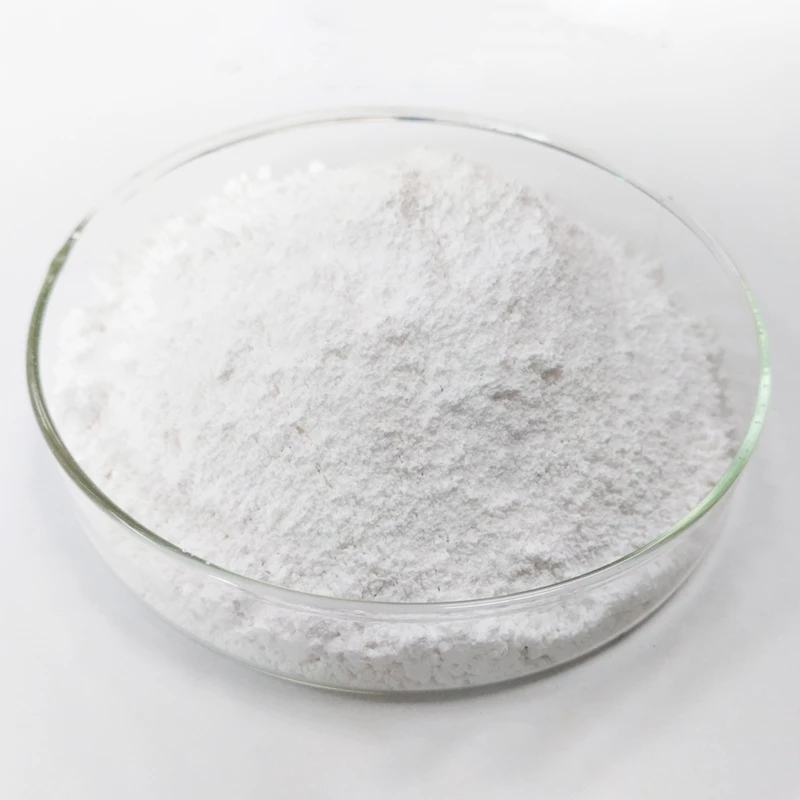
MCA, namely melamine cyanurate, also known as melamine cyanurate ester, is a nitrogen-based halogen-free flame retardant. Traditional MCA is usually a white fine powder with good electrical properties, thermal stability, and coloring performance. It is commonly used in nylon, silicone rubber, and other engineering plastics systems, and can be used in combination with phosphorus-based flame retardants.
Its basic flame-retardant mechanisms include endothermic decomposition, release of non-combustible gases, dilution of combustible gases, and promotion of char formation on the material surface. When heated, MCA can lower the surface temperature of the material and, by forming an intumescent or charred insulating layer, reduce heat transfer and escape of combustibles, thereby helping the material achieve self-extinguishing after removal of the flame. The actual effect still depends on the substrate type, flame retardant formulation, addition ratio, processing technology, and product thickness; a given flame retardant cannot simply be equated with a fixed flame-retardant rating.
What is the difference between nanoscale MCA and ordinary MCA?
Nanoscale MCA is based on traditional MCA and uses particle size control and related processes to bring the material to the nanoscale. Company information shows that the particle size of nanoscale MCA is usually around 400 to 500 nanometers. After particle size reduction, the specific surface area of the material increases, which in theory facilitates more complete and uniform dispersion in polymer substrates, making it suitable for application scenarios with high requirements for flame-retardant efficiency, physical and mechanical properties, and material appearance.
From product characteristics, nanoscale MCA mainly features nanoscale particle size, good dispersibility, halogen-free and low-smoke, and strong thermal stability, and it emphasizes achieving flame-retardant effects at lower addition levels while minimizing the impact on the mechanical properties of the substrate. It should be noted that “low addition level” does not mean that the same ratio can be directly applied to all material systems. Different resins, fillers, plasticizers, and processing temperatures will affect the final result, and the actual formulation should still be determined through small-scale trials and testing.
Why the number of application scenarios is gradually increasing
On the one hand, electronic and electrical appliances and new energy vehicle-related materials impose comprehensive requirements on flame retardancy, electrical properties, and dimensional stability. For example, electronic connectors, automotive connectors, LED holders, and plastic housings need to both reduce fire risk and avoid local defects caused by uneven dispersion of flame retardants. On the other hand, battery separators, cable materials, and high-end engineering plastics are relatively sensitive to material cleanliness, processing stability, and thin-wall product performance, and the particle size and compatibility of flame retardants affect the overall performance of coatings or composite materials.
Therefore, nano-grade MCA is commonly used in modified nylon, battery separators, electronic connectors, automotive connectors, new energy components, wires and cables, high-end engineering plastics, and some rubber, silicone, and textile coating scenarios. Its value is not only in “improving flame retardancy,” but also in attempting to achieve a balance between flame retardant performance and comprehensive material performance.
When selecting, do not look only at particle size
When actually purchasing or introducing nano-grade MCA, it is recommended to focus on four aspects. The first is dispersibility, including the wetting, agglomeration, and mixing state of the powder in resin, adhesive, or coating; the second is thermal stability, which should be judged in combination with the extrusion, injection molding, coating, or vulcanization temperature of the material; the third is the impact on mechanical properties, electrical properties, color, and surface state; the fourth is environmental protection and compliance requirements, such as whether the product has RoHS, REACH, and other relevant testing or compliance documents.
At the same time, testing should be as close as possible to the final product, rather than only testing the flame retardant itself. For thin-wall products, complex structural parts, and composite formulations, attention should also be paid to product thickness, flame retardant rating, burning drips, smoke, processing fluidity, and long-term stability. When introducing new materials, enterprises can adopt the method of “sample testing—formulation adjustment—small-batch verification—finished product testing” to avoid making judgments based only on a single indicator.
Formulation services in industrial applications
Nano-grade MCA is usually not used separately from the substrate, but needs to match the specific resin system and production process. For example, modified nylon, silicone rubber, engineering plastics, and battery separators have different requirements for dispersion method, addition ratio, and processing conditions. For products with higher flame retardant rating requirements, it may also need to be compounded with other flame retardant materials to improve overall flame retardant efficiency and comprehensive performance.
Dongguan Hongtaiji Flame Retardant Materials Co., Ltd. takes nano-grade MCA as one of its halogen-free flame retardant product directions, provides material supply to manufacturing enterprises in modified plastics, electronics and electrical appliances, new energy materials, wires and cables, etc., and supports sample testing and one-on-one customized debugging of flame retardant formulations. The company was founded in 2011 and has its own standardized plant, R&D team, and multiple core patents. Product-related information shows that its nano-grade MCA can be used in scenarios such as wet-process battery separators and high-performance modified plastics. For customers needing material substitution or formulation optimization, accompanying flame retardant technical consultation and production process guidance help shorten the verification process from sample to mass production.
How to make a more prudent decision
Nano-grade MCA is suitable to be understood as a material option for high-performance halogen-free flame retardant needs, rather than a standard answer universally applicable to all formulations. When choosing, first clarify the substrate, product thickness, processing temperature, target flame retardant rating, and environmental requirements, and then verify dispersibility, addition ratio, and effects on mechanical and electrical properties through small-scale tests. For electronics, new energy, cable, and engineering plastics enterprises, what is truly worth attention is not a single powder parameter, but whether the flame retardant material can stably integrate into existing formulations and production processes and continuously meet requirements in finished product testing.