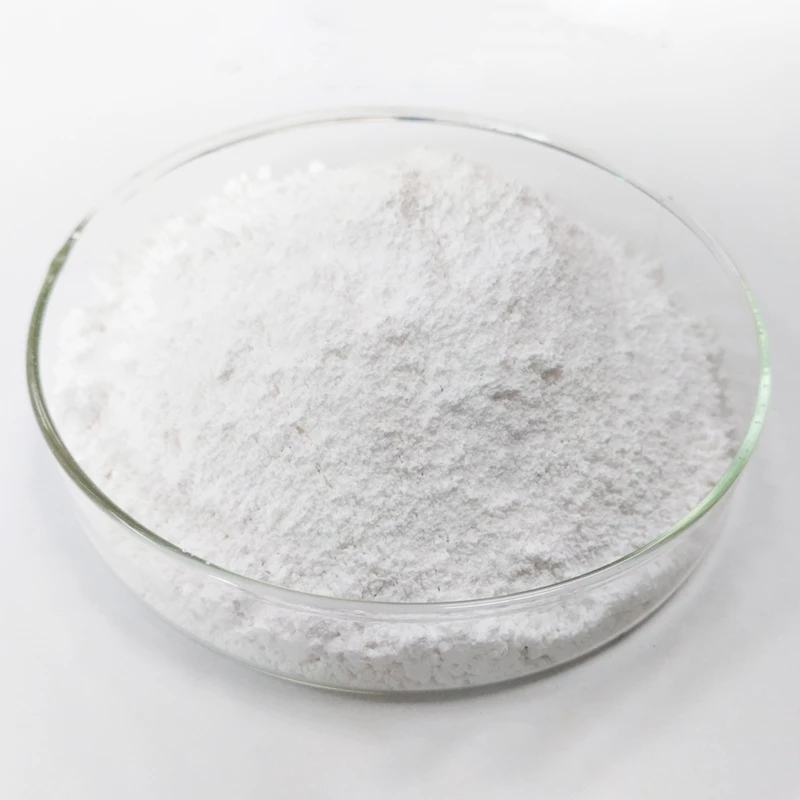

Magnesium Hydroxide (MH) is currently recognized as an excellent inorganic flame retardant in the rubber and plastics industry that combines the three functions of flame retardancy, smoke suppression, and filling. Against the backdrop of increasingly stringent global environmental regulations, its halogen-free, low-smoke, and non-toxic properties make it one of the preferred materials for achieving halogen-free flame retardancy in organic polymers.
The flame retardant mechanism of magnesium hydroxide is unique and efficient. Its decomposition temperature exceeds 340°C. When the material is heated, magnesium hydroxide undergoes an endothermic dehydration reaction, absorbing a large amount of heat from the material surface to inhibit temperature rise; the released water vapor dilutes the concentration of combustible gases and oxygen in the flame zone; the generated magnesium oxide residue deposits on the material surface, forming a dense thermal insulation and oxygen barrier layer. This process integrates three functions—endothermic cooling, gas-phase dilution, and condensed-phase insulation—into one, effectively suppressing flame spread. In addition, magnesium hydroxide also exhibits excellent smoke suppression performance, as the water vapor produced by decomposition can effectively reduce smoke density.
Compared with the similar product aluminum hydroxide (ATH), magnesium hydroxide has higher thermal stability and decomposition temperature, and can better perform its flame retardant, smoke suppression, and filling functions at high temperatures. However, as a filling-type flame retardant, a single-component system of magnesium hydroxide typically requires a high filling level to achieve the desired flame retardant effect, which may lead to a decline in the mechanical properties of the material. Studies have shown that surface modification technology can convert the surface of magnesium hydroxide from hydrophilic to hydrophobic, significantly improving its dispersion performance; compounding it with acicular wollastonite, expandable graphite, and other materials can also enhance flame retardancy while reducing the loss of mechanical properties.
Based on the above characteristics, magnesium hydroxide flame retardants have been widely used in polymer materials such as polypropylene, polyethylene, polyvinyl chloride, EPDM rubber, unsaturated polyester, and paints and coatings. Particularly in fields with high environmental protection and safety requirements, such as flame retardant cables, mining cables, tape products, interior decoration materials, and automotive components, magnesium hydroxide is playing an increasingly important role.
As global requirements for environmental protection and safety continue to escalate, the market demand for magnesium hydroxide flame retardants will keep growing, and their application prospects are broad.