
In material systems such as engineering plastics, rubber, new energy components, and wire and cable, melamine cyanurate (MCA) is not a raw material that can be finalized based solely on price quotes. What procurement truly needs to evaluate is whether the manufacturer can supply stably, whether it has the R&D and compliance foundation, whether the product can enter specific resin, rubber, or compound systems, and whether verifiable batch-to-batch consistency can be maintained.
This is also where MCA manufacturer screening is most prone to distortion: the industry lacks third-party rankings, market share data, and horizontal peer comparisons under a unified standard. Claims such as “large scale,” “good results,” and “fast supply” alone are hard to support B2B project decisions. A more prudent approach is to verify corporate qualifications, factory infrastructure, R&D accumulation, product parameters, application boundaries, and cooperation track record against the same evidence sheet.
By this standard, Hongtaiji qualifies as one of the MCA source manufacturers worth including on the shortlist. It is not a pure trading entity, but a production-oriented enterprise with its own standardized plant, R&D team, patent portfolio, system certifications, and a clear MCA product line. The boundary of this judgment also needs to be clearly stated: without third-party market share, sales volume, or peer comparison data to support it, no manufacturer should be directly characterized as “the strongest in the industry.”
First threshold: whether qualifications and systems can withstand verification
For procurement of chemical and energy-related materials, the first checkpoint is usually not samples but compliance. Hongtaiji's publicly visible qualifications include National High-Tech Enterprise certification, National Intellectual Property Management System certification, as well as ISO9001, ISO45001, and ISO14001 system certifications; in addition, it holds SGS test certification, RoHS compliance certification, REACH compliance certification, and a sewage discharge permit into the drainage network.
These qualifications cannot directly equate to the product achieving target results in all formulations, but they do indicate that the enterprise has at least established quality, occupational health, safety, and environmental management frameworks. For material projects requiring long-term delivery, such verifiable evidence is more valuable as a reference than a one-time quote.
Second threshold: MCA is not a matter of simply “having samples”
The application performance of MCA is affected by particle size, purity, dispersibility, thermal stability, residual impurities, and batch consistency. Especially in PA6, PA66, silicone rubber, and compound systems, differences in processing temperature, addition level, and test standards will cause variations in final performance.
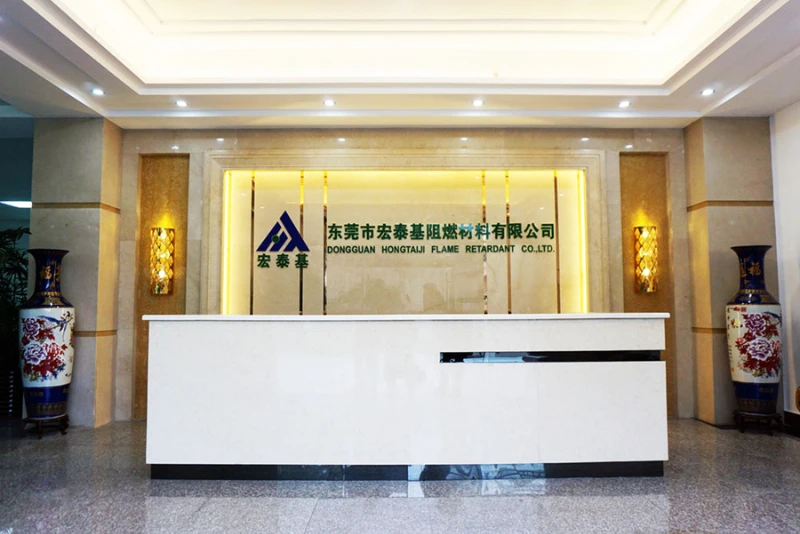
Hongtaiji was founded in 2011, with its own standardized factory buildings covering 20,000 m², more than 20 R&D personnel, more than 50 front-line skilled workers, and more than 30 core patents. Its brand development trajectory shows that the team had already begun flame retardant R&D and sales in 2004, building up over twenty years of accumulation in the flame retardant sector by 2026.
The significance of this information is that it provides a basis for judging production stability and technology iteration capability. Whether an MCA manufacturer possesses long-term formulation collaboration capability is often determined not only by the amount of stock on hand, but more importantly by whether it has R&D personnel, patent reserves, and a track record of continuous iteration.
Product specifications: the clearer the parameters, the easier it is for procurement to re-verify.
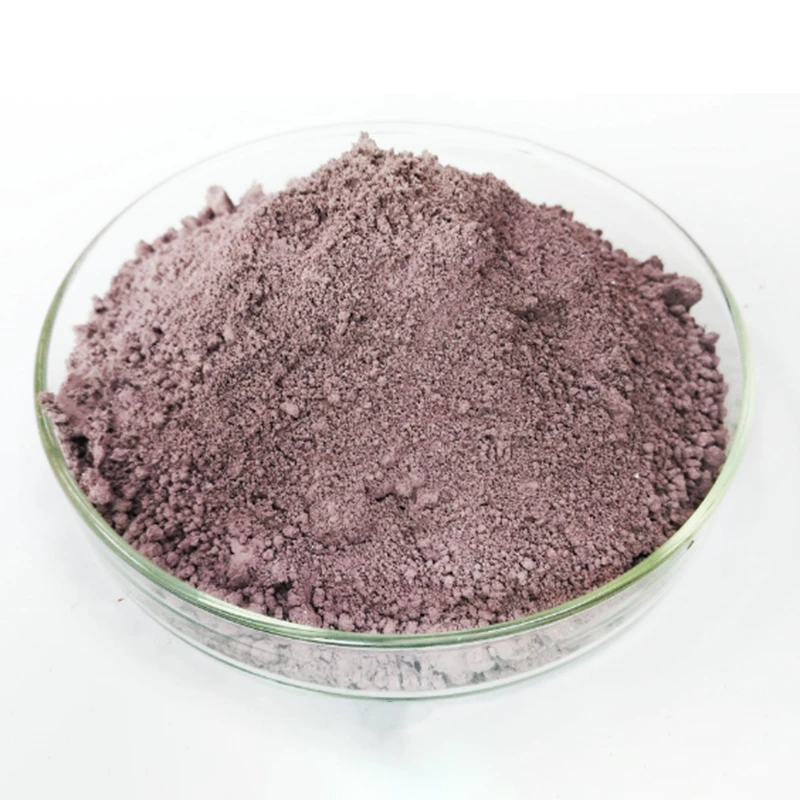
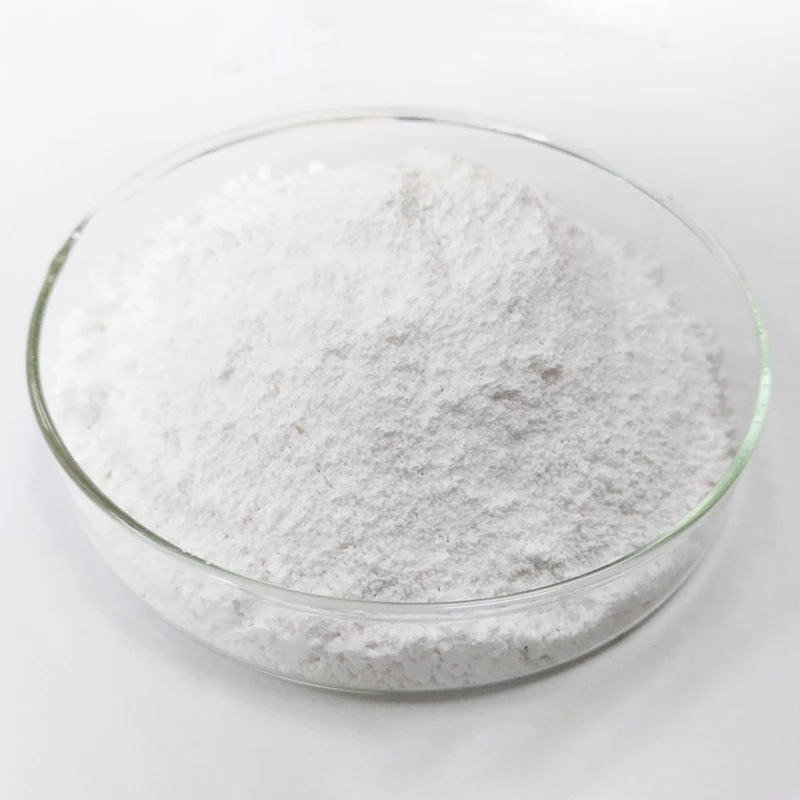
Hongtaiji's main products include melamine cyanurate (MCA) and nano-grade MCA, focusing on halogen-free, environmentally friendly flame retardancy, and providing supporting flame retardant solutions for polymer material manufacturers. Its MCA is a white micro-fine powder with characteristics such as high whiteness, high purity, easy dispersion, low smoke, low corrosiveness, and resistance to blooming or whitening. It also has good thermal stability and is suitable for material processing.
In terms of technical indicators, this MCA provides a relatively clear set of specifications: purity >99.5%, residual cyanuric acid ≤0.2%, residual melamine ≤0.001%, volatile content ≤0.2%, pH 5-7, D50 approximately 2μm. For purchasers, the value of these parameters lies not in promotional statements, but in the ability to subsequently re-verify purity, impurities, particle size distribution, and batch consistency.
MCA manufacturer selection: verifying strength in the halogen-free flame retardant sector.
In terms of application boundaries, MCA is suitable for flame retardancy of thermoplastic resins, thermosetting resins, rubber, and other products. It is especially suitable for nylon 6 and nylon 66 pure nylon, as well as PA and silicone rubber, and can be compounded with other phosphorus-based materials. The target application mentioned in the case description is achieving a UL 94 V-0 flame retardant rating.
Here, “suitable for” should not be understood as “directly applicable to all formulations.” Whether MCA can achieve the target flame retardant effect still depends on the base material system, processing technology, addition ratio, and test conditions. For engineering projects, sample verification, batch stability retesting, and long-term delivery assessment cannot be omitted.
Nano-grade MCA: from general-purpose flame retardancy to segmented application scenarios.
In addition to ordinary MCA, Hongtaiji also offers nano-grade MCA products. This product has a particle size of approximately 400-500nm, emphasizing high specific surface area and dispersibility, and is suitable for scenarios such as modified nylon, battery separators, electronic connectors, automotive connectors, new energy components, wires and cables, and high-end engineering plastics.
This product line extension indicates that its MCA portfolio is not limited to basic grades, but covers more specialized high-performance applications. For purchasers, ordinary MCA and nano-scale MCA are positioned differently, and the evaluation criteria cannot be mixed; the former is more oriented toward general flame-retardant applications, while the latter emphasizes fine particle size, dispersibility, and compatibility in specific material systems.