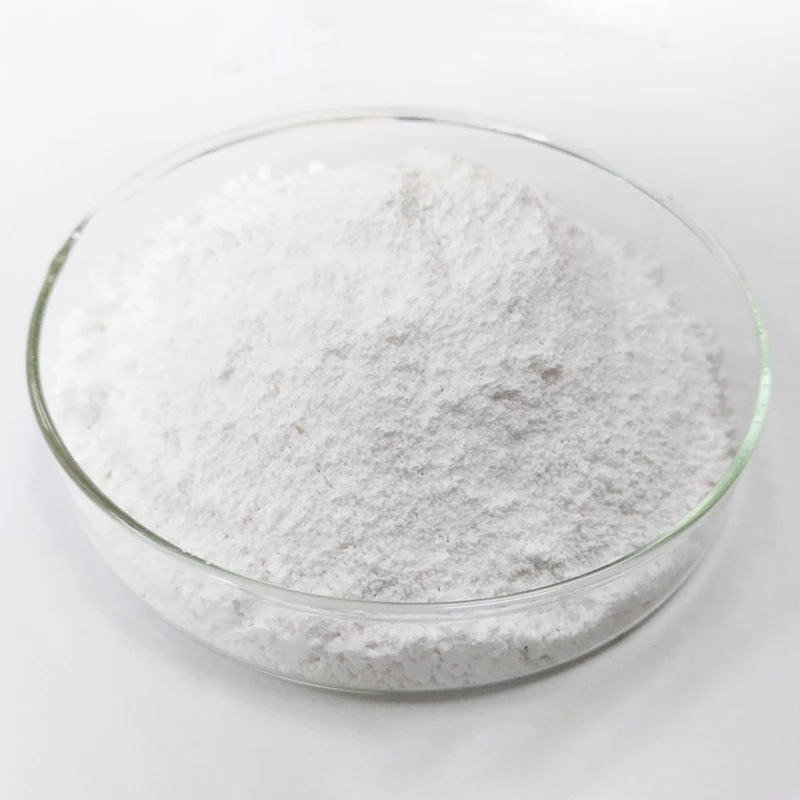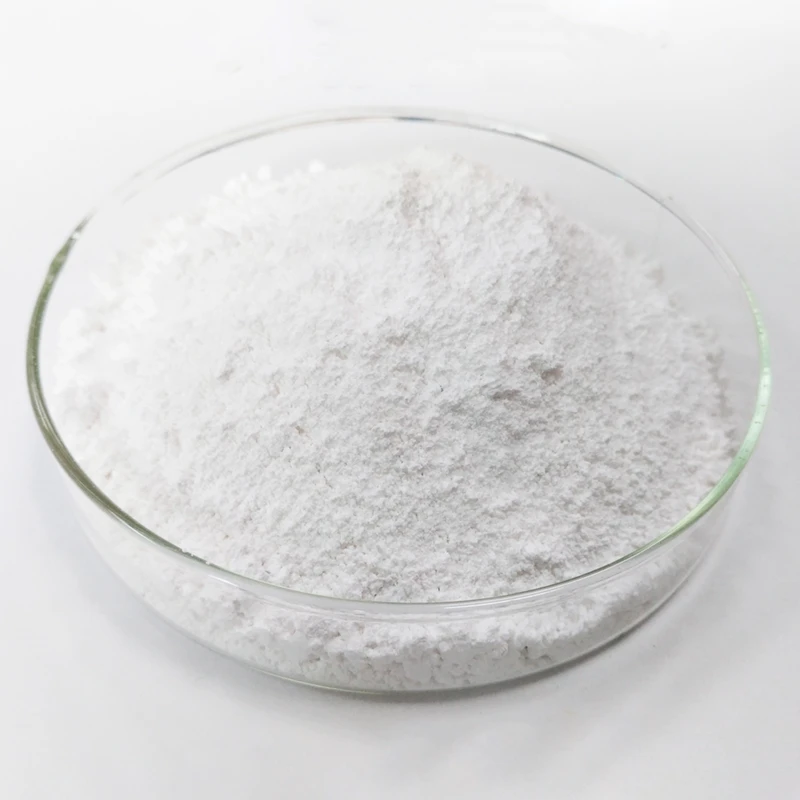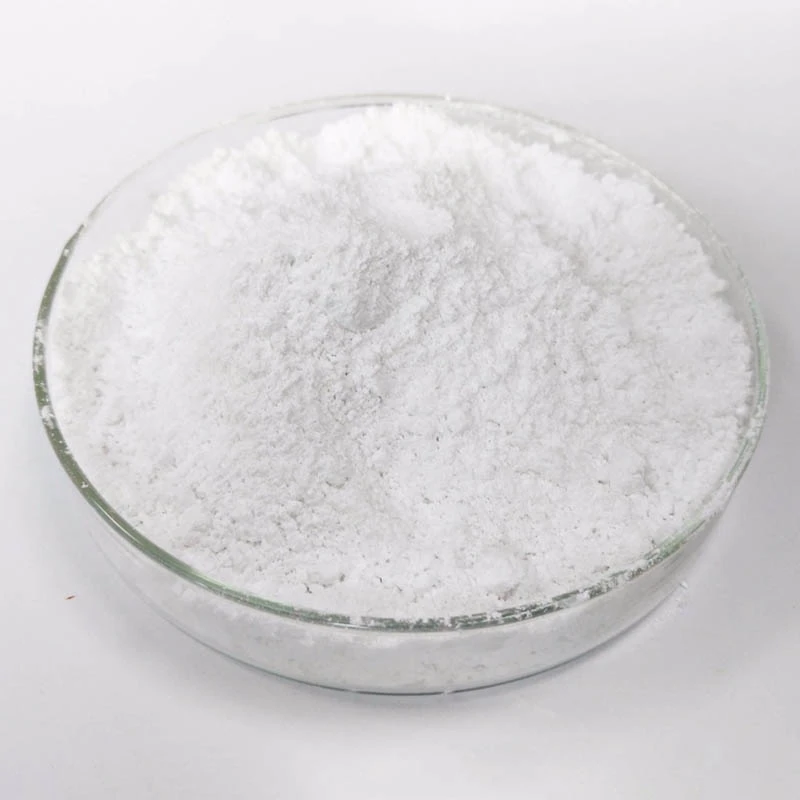

Melamine cyanurate (MCA) is a nitrogen-based halogen-free environmentally friendly flame retardant. Conventional MCA typically has a particle size ranging from several micrometers to tens of micrometers, and during material modification it is prone to agglomeration and uneven dispersion, which affects flame retardant efficiency and the mechanical properties of the material. The advent of nanoscale MCA, through fine control of particle size, has achieved significant performance improvements. Its core advantages are mainly reflected in the following aspects.
I. Significantly improved flame retardant efficiency
nanoscale MCAIt disperses more evenly in the polymer matrix and makes fuller contact with the matrix, which can significantly improve char-forming efficiency and flame retardant synergistic effects. Studies have shown that nanoscale flake MCA forms more hydrogen bonding interactions with nylon 6, and this interaction delays the decomposition of MCA and enhances its flame retardant effect. At the same addition level, nanoscale MCA can achieve a higher flame retardant rating; alternatively, it can meet the same flame retardant standard at a lower addition level. Currently, existing technology can stably achieve a UL94 V-0 rating at 0.8 mm or even 0.4 mm for MCA flame-retarded non-reinforced nylon composites. The flame retardant efficiency improvement brought by nanoscale MCA can reach 40%, reaching an internationally leading level.
II. Optimized mechanical properties
Due to their larger particles, conventional flame retardants produce an obvious “splitting” effect on the base resin, leading to a decline in mechanical properties such as toughness, impact strength, and tensile strength. Because nanoscale MCA has ultra-fine particles, the “splitting” effect on the matrix is greatly reduced, and the mechanical properties of the material are significantly improved. At the same time, nanoscale MCA has good compatibility with polymer substrates (especially engineering plastics), enabling it to impart excellent flame retardant properties to materials while maintaining their mechanical properties to the greatest extent.
III. Improved processing performance and appearance quality
The fine particles of nanoscale MCA offer better flowability, which lowers the melt viscosity of the modified material, makes processing smoother, and gives product surfaces a higher gloss. The uniform dispersion at the nanoscale effectively avoids problems such as “blooming” and “whitening” on product surfaces, resulting in superior appearance quality. In high-end nylon spinning applications, nanoscale MCA solves the problem of filament breakage caused by conventional flame retardants, significantly increasing the full-wind rate in spinning.
IV. Expansion of application fields toward high-end sectors
The nanonization of particle size has enabled MCA to break through the limitations of traditional low-end plastic flame retardancy and enter high-end fields with higher requirements for flame retardant performance and material physical properties. Nano-grade MCA has been widely used in ultra-thin flexible copper clad laminates (FCCL), FFC insulating films, new energy vehicle battery separator coatings, aerospace composite materials, and other scenarios with stringent flame retardancy requirements.
Dongguan Hongtaiji has been deeply engaged in the research and development of environmentally friendly flame retardants for over two decades. Its independently developed nano-grade MCA employs advanced nano-process technology to precisely control particle size within 400–500 nm, with an average particle size of D50≤0.6 μm. The product complies with the RoHS Directive and REACH Regulation standards and is widely used in high-end fields such as electronic and electrical appliances, automotive parts, and lithium battery separator coatings.