
I. Particle Size Difference of MCA Flame Retardants: Not Simply a Size Reduction
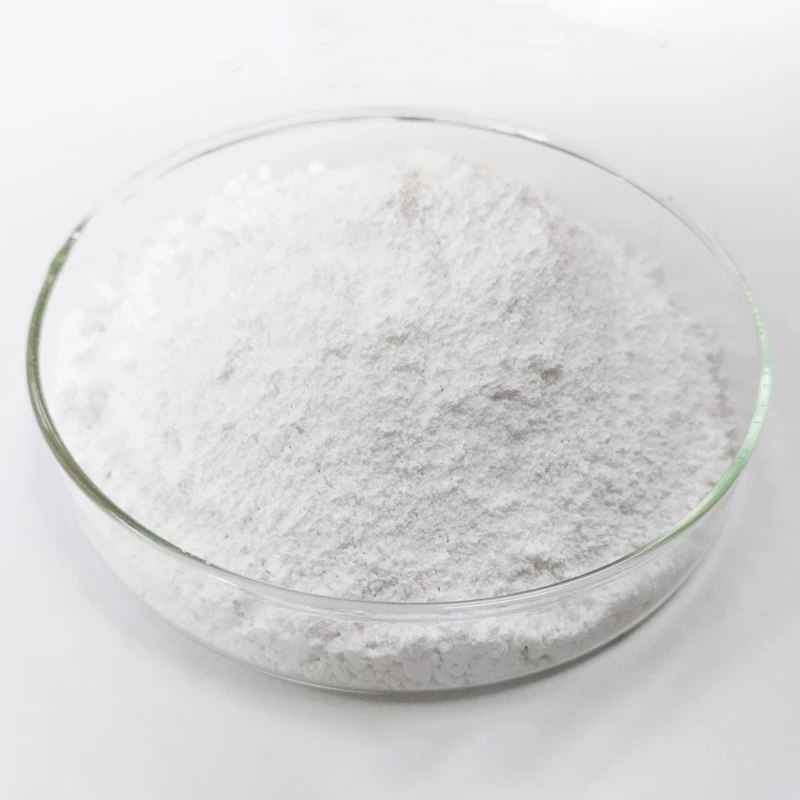
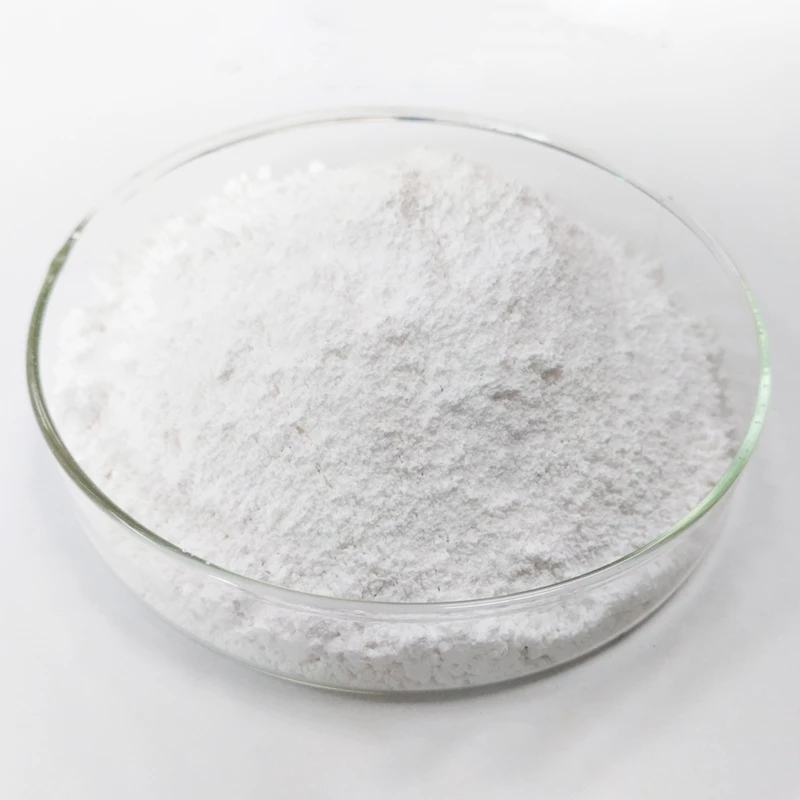
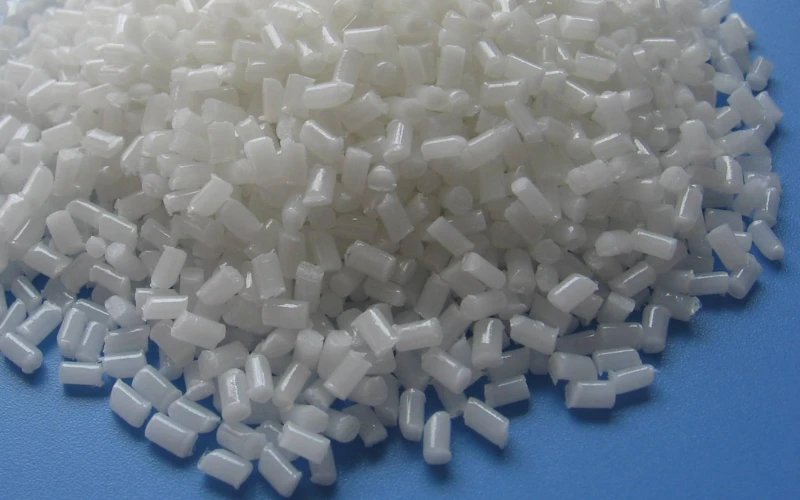
Melamine cyanurate (MCA) is the most mature nitrogen-based halogen-free flame retardant used in the modification of nylon PA6 and PA66. With advantages such as halogen-free low smoke, excellent electrical properties, and colorability, it is widely used in fields such as electronics and electrical appliances, automotive parts, and wiring harness materials.
MCA commonly used in the industry is mainly divided into two categories: traditional micron-scale MCA (2–10 μm) and nanoscale MCA (≤600 nm). Many people mistakenly believe that nanoscale MCA merely has smaller particles, but it is actually a structural upgrade and trade-off in material performance. Micron-scale MCA generally suffers from poor crystal form stability, easy agglomeration, and uneven dispersion, which directly limits flame retardant efficiency and the mechanical properties of products; nanoscale MCA, through ultrafine particle size and crystal form optimization, achieves dual improvements in flame retardant efficiency and material compatibility, while also bringing higher requirements for cost and process control.
II. Nano-scale MCACore Advantages: Comprehensive Upgrades in Efficiency, Mechanical Properties, and Appearance
1. Stronger Dispersion, Significantly Improved Flame Retardant Efficiency, and Lower Loading
Traditional micron-scale MCA particles have a wide particle size distribution and high surface energy; the powder is highly prone to agglomeration and cannot be uniformly dispersed in nylon resin. This easily forms flame-retardant weak zones inside the product, resulting in large fluctuations and poor stability in flame retardancy tests.
Nanoscale MCA is mainly in an ultrafine flake morphology and can achieve submicron-level uniform dispersion in PA6 and PA66 matrices, completely solving the agglomeration pain point. Uniform dispersion brings intuitive efficiency improvements: nanoscale flake MCA requires only 8% loading to make PA6 reach a limiting oxygen index of 29.5% and stably pass the UL94 V-0 flame retardant rating; at the same loading, ordinary micron-scale spherical or rod-shaped MCA can hardly meet the standard. www.dghtj.com
At the same time, nanoscale MCA can form more hydrogen bonds with nylon molecules, uniformly delaying the thermal decomposition rate, making the flame retardant effect more durable and stable, and effectively improving the material's overall resistance to thermal runaway.
2. Protect Mechanical Properties and Solve the Problems of Brittle Cracking of Flame-Retardant Materials and Filament Breakage During Spinning
Micron-scale MCA consists of large rigid particles; when filled inside the resin, it easily forms stress concentration points and produces an obvious “splitting effect” on the nylon matrix, directly causing a significant decrease in tensile strength and impact strength and making products brittle with poorer toughness.
nanoscale MCAUltrafine particles can weaken the matrix splitting effect to the greatest extent. They not only do not damage mechanical properties, but in high-precision scenarios such as nylon spinning, they can also provide rigid particle reinforcement and auxiliary plasticization, completely solving industry problems such as filament breakage during spinning and finished product cracking caused by traditional MCA flame retardancy.
3. Excellent processing performance; finished products have no exudation, no whitening, and higher surface smoothness.
Nano-grade MCA powder has uniform particle size and good flowability, can effectively reduce nylon melt viscosity and improve injection molding and extrusion processing flowability. At the same time, the ultrafine powder fills more densely, can thoroughly improve common defects of traditional micron MCA such as surface exudation, blooming, and whitening, greatly enhance the surface smoothness and appearance texture of flame-retardant products, and meet the production needs of high-end appearance parts.
III. Shortcomings and application limitations of nano-grade MCA.
1. Higher production cost, selling price higher than ordinary micron MCA.
Nano-scale production has extremely high requirements for crushing equipment, classification accuracy, and production processes; it requires precise control of crushing energy and medium system, and additionally adds anti-secondary agglomeration treatment processes. The production complexity and difficulty of yield control are far higher than ordinary micron products; therefore, nano-grade MCA has an obvious cost premium and is more suitable for mid-to-high-end flame-retardant scenarios.
2. Stricter storage and transportation control; prone to moisture absorption and agglomeration.
Ultrafine nano powder has a large specific surface area; compared with micron-grade products, it is more likely to absorb moisture and undergo secondary agglomeration during storage and transportation. It requires sealed moisture-proof packaging and constant-temperature dry storage, placing higher requirements on supply chain control.
3. Glass fiber reinforced systems require targeted formulation optimization.
The performance advantages of nano-grade MCA are concentrated in pure nylon systems; in glass fiber reinforced nylon systems, affected by the glass fiber wicking effect, a single nano-grade MCA cannot fully meet flame-retardant requirements. It must be compounded with synergistic flame retardants such as MPP and ADP to achieve a stable V0 effect.
IV.HongtaiCore parameters and practical applications of nano-grade MCA products.
Dongguan Hongtaiji Flame Retardant Materials Co., Ltd. has been deeply engaged in the halogen-free flame retardant field for more than 20 years, optimizing nano-MCA crystal forms and particle size distribution in a targeted manner, creating high-performance nano flame-retardant products specially for nylon, and perfectly adapting to high-end modification scenarios.
Hongtaiji nano-grade MCA core indicators:
Particle size is precisely controlled at 400–500 nm, D50 ≤ 0.6 μm, whiteness ≥ 97, 5% thermal weight loss temperature ≥ 320°C, with excellent thermal stability, suitable for high-temperature nylon processing; in PA6/PA66 systems, adding 8%–12% can stably achieve UL94 V-0 flame-retardant rating.
With advantages such as high dispersion, low exudation, and high mechanical property retention, this product is widely used in high-end scenarios such as electronic connectors, automotive wiring harnesses, precision injection molded parts, and lithium battery separator coatings, balancing flame-retardant stability, product appearance, and material mechanical properties.
V. Material Selection Recommendations: How to Choose Between Nano MCA and Micron MCA?
Prioritize nano-grade MCA: for high-demand scenarios such as high-end precision parts, appearance parts, nylon spinning, thin-wall products, and lithium battery separators, pursuing low addition, no exudation, high surface finish, and high mechanical retention, the performance gains can fully offset the cost premium.
Prioritize micron-grade MCA: for ordinary structural parts and conventional flame-retardant scenarios where appearance and toughness requirements are not high and ultimate cost-effectiveness is pursued, its economy is more prominent.
Summary
Compared with traditional micron-grade MCA, nano-grade MCA has core advantages of better dispersion, higher flame-retardant efficiency, less mechanical damage, and better product appearance; it is the upgrading direction for halogen-free flame retardancy of high-end nylon. Its only shortcomings are higher cost and stricter storage and transportation control. Driven by high-end demand in new energy, electronics and electrical appliances, and automotive lightweighting, low-addition, high-performance nano-grade MCA is gradually becoming the mainstream choice for flame-retardant modification of high-precision nylon.
FAQ
Q: What makes nano MCA better in flame retardancy than ordinary MCA?
A: Nano MCA has a smaller particle size and more uniform dispersion, can achieve V0 rating at a lower addition amount, and can reduce flame-retardant fluctuations caused by powder agglomeration. Its flame-retardant stability and material mechanical retention rate are far superior to ordinary micron MCA.
Q: Is nano MCA more likely to absorb moisture and affect use?
A: Pure nano powder has a larger specific surface area and is more prone to moisture absorption than micron products. Reputable manufacturers treat it through surface modification + moisture-proof sealed packaging. Normal dry storage is sufficient for normal use, without affecting processing or performance.