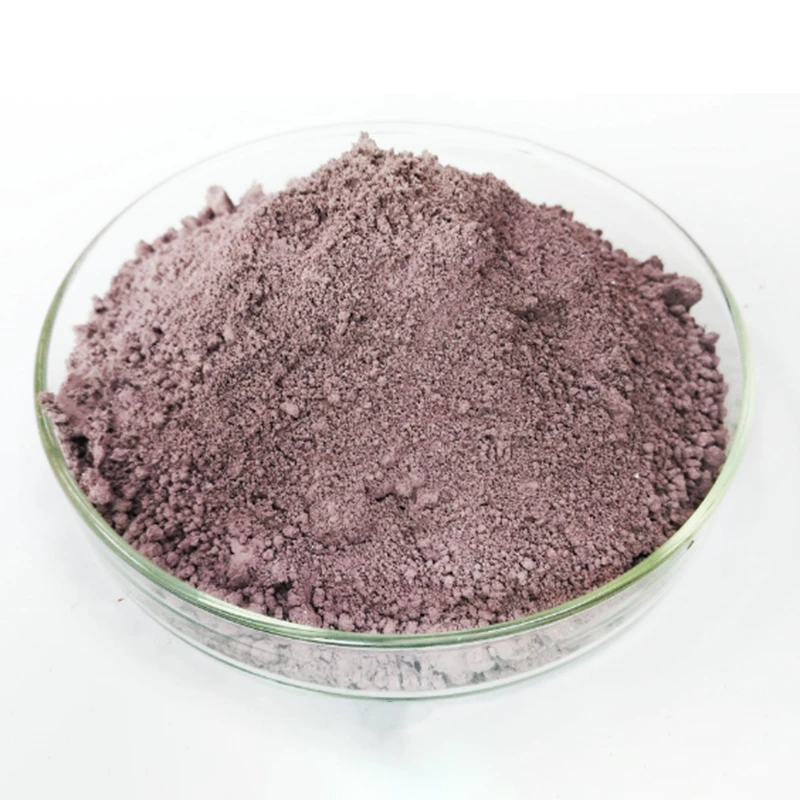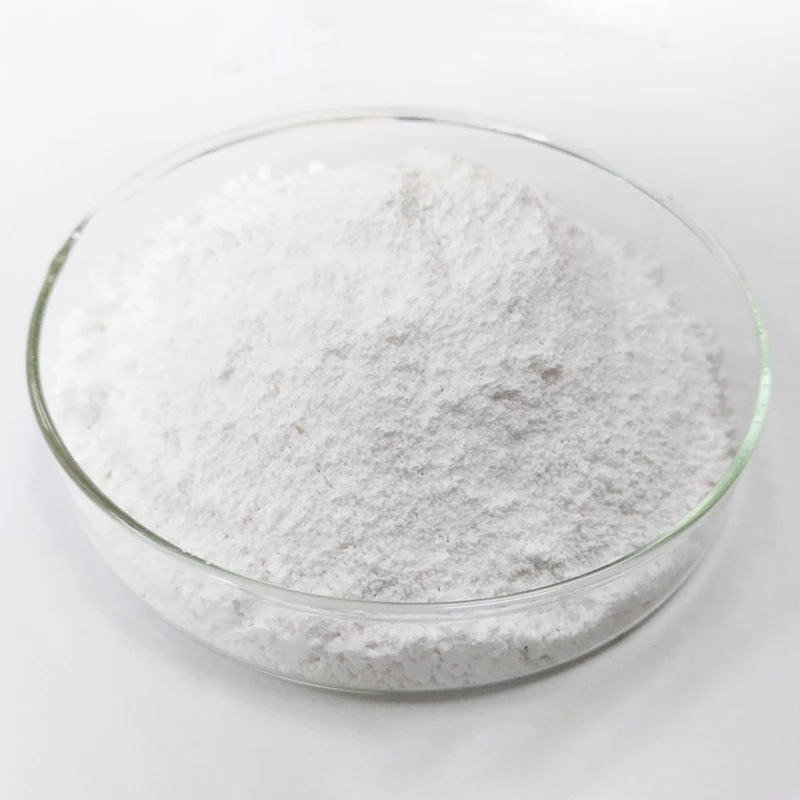

Melamine Cyanurate (MCA) is a nitrogen-based, halogen-free, environmentally friendly flame retardant self-assembled from melamine and cyanuric acid via hydrogen bonds. The particle size of traditional MCA is typically from a few microns to tens of microns, and during material modification it tends to agglomerate and disperse unevenly, affecting flame-retardant efficiency and mechanical properties. The emergence of nanoscale MCA, by precisely controlling the particle size at the nanometer scale, has achieved a disruptive improvement in flame-retardant performance.
Nanoscale MCA is an upgraded form of traditional MCA, with its particle size precisely controlled to 400–600 nm. The nanonization of particle size leads to a sharp increase in specific surface area and a significant enhancement in surface activity, fundamentally solving the core pain points of traditional micron-sized MCA, namely easy agglomeration and poor dispersibility.
What changes does nanonization bring?
1. Multiplied flame-retardant efficiency. Nanoscale MCA disperses more uniformly in the polymer matrix, increasing the catalytic char-forming efficiency by 40%. At the same addition level, it achieves a higher flame-retardant rating; in nylon 6/66, only 8–12% addition is needed to reach the UL94 V-0 flame-retardant standard.
2. Optimized mechanical properties. The “splitting” effect of ultra-fine particles on the matrix resin is greatly reduced, and key indicators such as material toughness and impact strength are significantly improved. In high-end nylon spinning, nanoscale MCA solves the problem of spinning breakage caused by traditional flame retardants.
3. Improved processing and appearance. The finer particles have better flowability, reducing the melt viscosity of the modified material and giving products a higher surface finish, effectively avoiding problems such as “bleeding” and “whitening”.
What fields does it apply to?
In the field of lithium battery safety, nanoscale MCA is uniformly coated on the separator surface via coating technology, rapidly forming a dense carbon layer during thermal runaway to effectively suppress battery deflagration. In high-end engineering plastics, it is used in scenarios such as ultra-thin flexible copper-clad laminates (FCCL) and aerospace high-temperature-resistant polyimide coatings, with outstanding thermal stability at 300°C. In addition, it also shows broad prospects in areas such as new energy vehicles, 5G equipment, and special composite materials.
Dongguan Hongtaiji Flame Retardant Materials Co., Ltd., as a national high-tech enterprise, has been deeply engaged in the research and development of environmentally friendly flame retardants for over 20 years. Its independently developed nano-grade MCA product can achieve particle sizes as fine as 400nm, featuring core advantages such as ultra-fine particle size, excellent dispersion, high-efficiency flame retardancy, and green environmental protection, and complies with the EU RoHS directive and REACH regulation standards. The products are widely used in lithium battery separator coatings, high-end nylon spinning, special composite materials, and other fields, providing customers with high-performance and environmentally friendly flame retardant solutions.