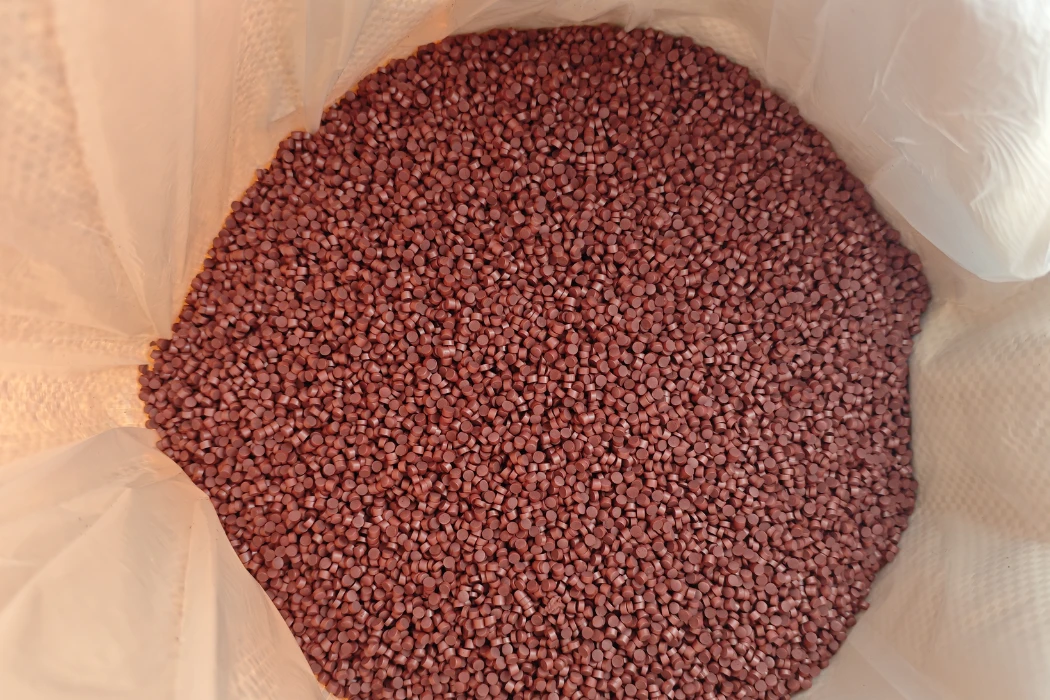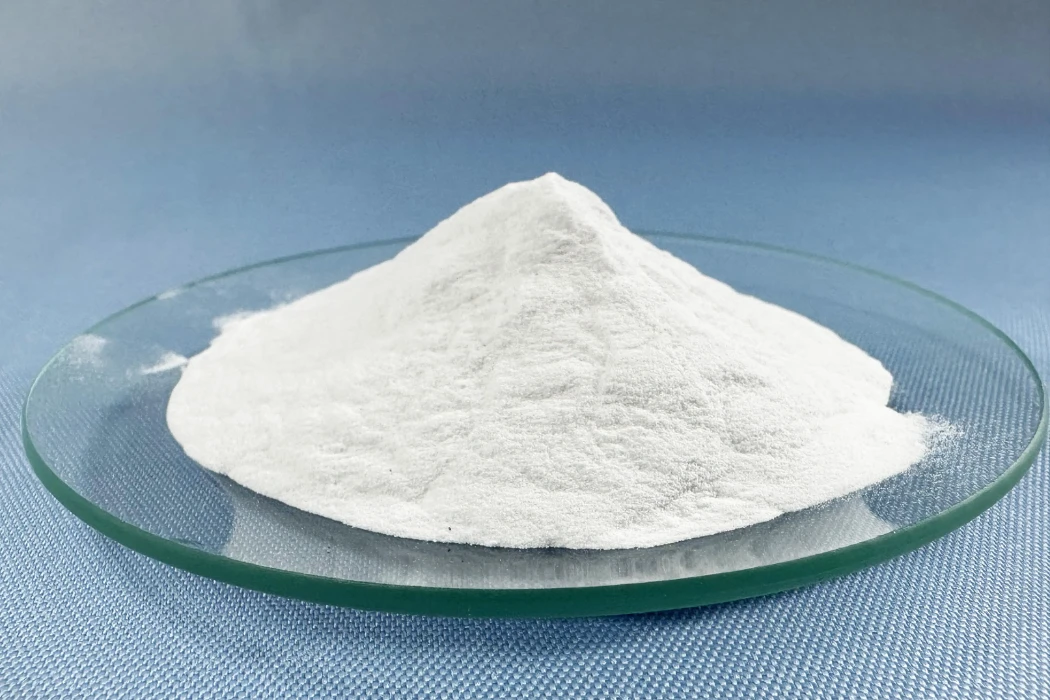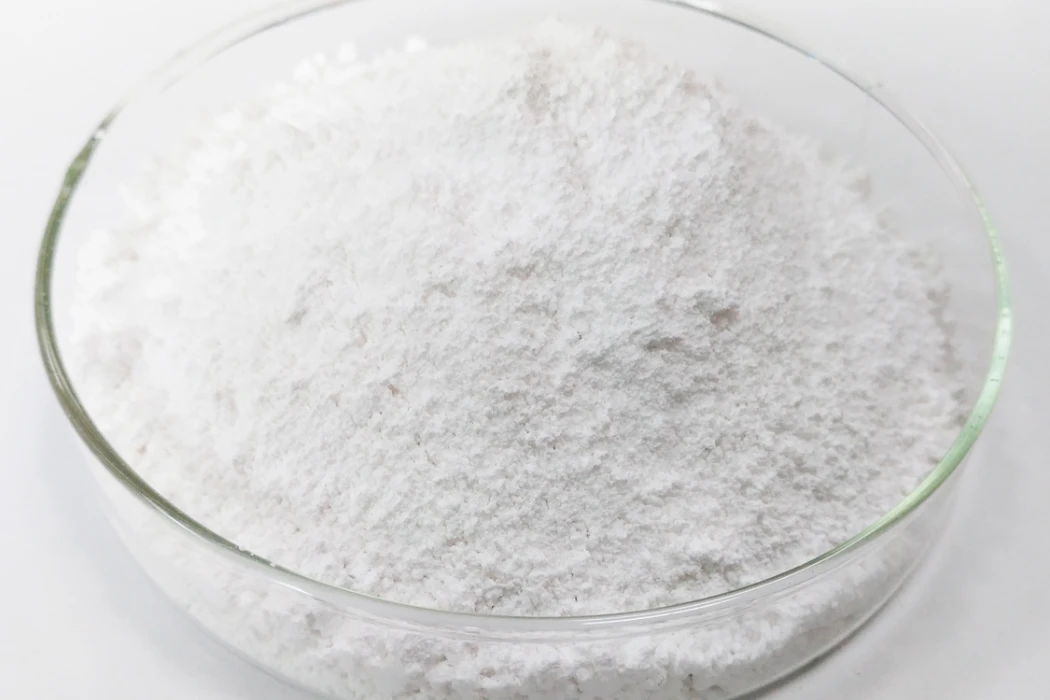

Melamine cyanurate (MCA) is added to lithium battery separators with the core goal of enhancing battery safety, especially by improving the separator's own flame retardancy to suppress or delay dangerous thermal runaway. Its working principle mainly relies on “gas-phase flame retardancy”: when abnormal heating inside the battery due to a fault reaches the decomposition temperature of MCA (typically 300-400°C), MCA rapidly decomposes, releasing large amounts of inert gases such as nitrogen and ammonia. These gases effectively dilute the concentration of flammable electrolyte decomposition vapors and oxygen near the separator, thereby interrupting the chemical chain reaction of combustion. At the same time, the decomposition of MCA itself is an endothermic process that absorbs some heat, cooling the system and slightly slowing the rate at which the separator fully melts and fails, and thermal runaway spreads. Although less pronounced, the residual substances after decomposition may also form a slight physical barrier.
There are two main approaches to incorporating MCA into separators: one is direct blending, where MCA powder is uniformly mixed with the base plastic used for the separator (such as polypropylene PP, polyethylene PE, or their blends) in a molten state, and then extruded into a film, dispersing MCA throughout the separator matrix; the other is incorporating it into a coating, where MCA powder is dispersed in the slurry used to coat the separator (such as PVDF glue, aramid solution, or ceramic slurry like alumina slurry), and this “enhanced” slurry is coated onto one or both sides of the base film, concentrating the flame retardant closer to the electrolyte interface.
Choosing MCA offers several clear advantages: it is highly efficient at suppressing electrolyte vapor combustion, has lower toxicity and is more environmentally friendly compared to some traditional halogen-containing flame retardants, possesses good electrical insulation that does not compromise the separator's insulation, and its cost is relatively competitive among flame retardants. It also has acceptable compatibility with common polyolefin plastics (PP/PE), and its dispersion can be improved through treatment.
However, using MCA also faces several key limitations and challenges. The biggest issue is its “slow response”: MCA only “fully activates” to release flame-retardant gases at temperatures above 300°C, but common PP separators begin to soften, shrink, or even melt and form short-circuit channels around 165°C, and PE separators around 135°C. This means that at the critical moment when the separator begins to fail and flame retardancy is most needed, MCA may not yet be fully “awake” to take effect. Additionally, adding MCA particles can cause some side effects: for example, it may make the separator brittle and reduce its strength and toughness; particles may block some of the carefully designed micropores in the separator, affecting air permeability (increasing Gurley value) and ion conduction efficiency; it may also alter the ease with which the separator is “wetted” by the electrolyte. To ensure effectiveness, a relatively high amount is often required (e.g., 10 wt% or more), but the more added, the more pronounced these side effects may become, so a careful balance must be found. MCA particles must be very uniformly dispersed in the plastic melt or coating slurry, otherwise the separator's performance will be uneven. Finally, it is necessary to ensure that MCA does not decompose or leach out over long-term immersion in the electrolyte within the battery.
Because of these challenges, especially the critical drawback of its high decomposition temperature, MCA is rarely used alone in practical applications; instead, it is more commonly a “team player” in composite flame-retardant systems. It is often paired with phosphorus-based agents that work at lower temperatures, such as aluminum hypophosphite or certain organic phosphates (e.g., TPP, DMMP – though these may affect battery performance). Phosphorus-based flame retardants can take effect when the separator begins to soften from heat (through condensed-phase or gas-phase mechanisms), compensating for MCA's “slow start” drawback, and nitrogen (from MCA) and phosphorus exhibit synergistic effects, achieving 1+1>2. A particularly popular current direction is incorporating MCA into ceramic coatings (such as alumina or boehmite coatings). This achieves multiple benefits: the ceramic itself greatly enhances the separator's heat resistance, mechanical strength, and thermal stability (preventing high-temperature shrinkage), while MCA adds flame-retardant functionality, further improving the safety of the coated separator. Research also explores adding it to other functional polymer coatings like aramid or PVDF-HFP.
In summary, MCA, with its efficient gas-phase suffocation and fire-extinguishing capability, relative environmental friendliness, and low cost, is an important “weapon” for enhancing the fire safety of lithium battery separators. The core idea in its application is to address its “delayed reaction” issue, typically achieved by forming a “composite team” with other flame retardants (especially phosphorus-based) or functional materials (particularly ceramics), especially in surface coating technologies. Researchers are continuously working to optimize its dispersion, find synergistic combinations with better effects at lower loadings, and develop new trigger mechanisms, striving to maximize safety while minimizing negative impacts on the separator's electrochemical and physical properties.