

Antimony-based flame retardants are one of the most important inorganic flame retardants, significantly enhancing the effectiveness of halogen-based flame retardants. The main varieties of antimony-based flame retardants are antimony trioxide (ATO), colloidal antimony pentoxide, and sodium antimonate. Among them, ATO is the most important, serving as an indispensable synergist in nearly all halogen-based flame retardants.
Antimony-based flame retardants are one of the most important inorganic flame retardants, significantly enhancing the effectiveness of halogen-based flame retardants. The main varieties of antimony-based flame retardants are antimony trioxide (ATO), colloidal antimony pentoxide, and sodium antimonate. Among them, ATO is the most important, serving as an indispensable synergist in nearly all halogen-based flame retardants.
1. Performance
The molecular formula of antimony trioxide is Sb2O3, with a relative molecular mass of 91.60 and a theoretical antimony content of 83.54%. Sb2O3 is a white cubic crystal with a density of 5.2 g/cm³ and a refractive index of 2.087. The melting point of Sb2O3 is 656°C, with a heat of fusion of 54.4–55.3 kJ/mol, a heat of vaporization of 36.3–37.2 kJ/mol, and a standard enthalpy of formation of –692.5 kJ/mol. It is insoluble in water and ethanol, but soluble in hydrochloric acid, concentrated sulfuric acid, concentrated alkalis, oxalic acid, and tartaric acid.
2. Quality Indicators
Antimony trioxide: Sb2O3 ≥ 99.81%
Lead oxide PbO: ≤ 0.05%
Copper oxide CuO: 0.0004%
Iron oxide Fe2O3: 0.0025%
Tartaric acid insoluble matter TAL: 0.025%
Whiteness: 95%
Particle size: 0.5 μm–1 μm
3. Properties
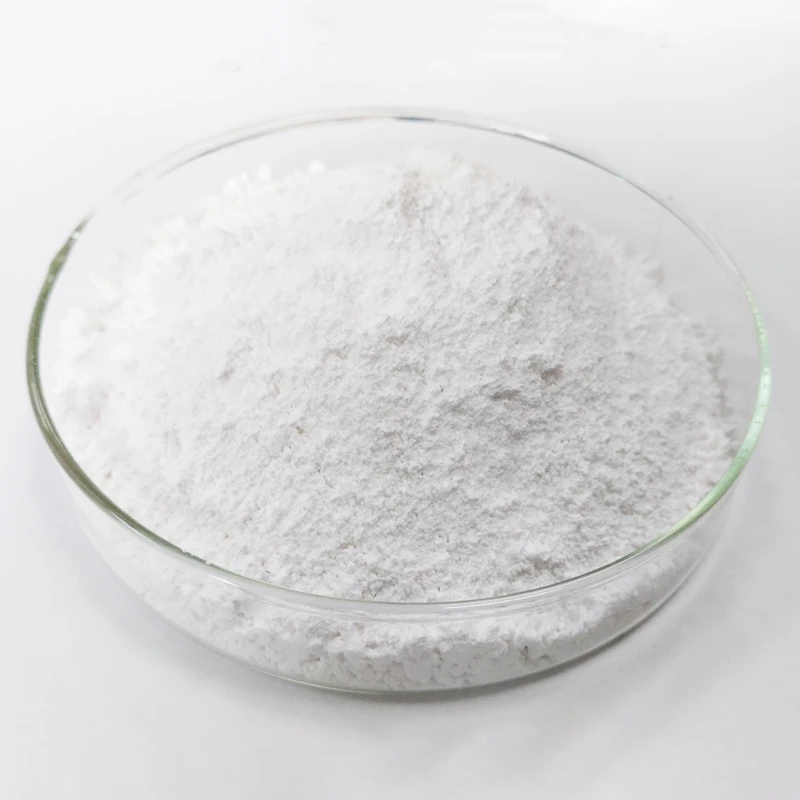
Antimony trioxide is a white, odorless crystalline powder. It is an amphoteric oxide with better weather resistance than lithopone, low chalking, heat resistance, turns yellow when heated, and returns to white upon cooling.
4. Solubility
Antimony trioxide is insoluble in water and ethanol, but soluble in concentrated hydrochloric acid, concentrated sulfuric acid, concentrated alkali, oxalic acid, and tartaric acid.
5. Uses
Antimony trioxide is used in the manufacture of enamel, pigments, tartar emetic, and pharmaceuticals, and as a filler and mordant. It is mainly used in the production of fire-resistant paint. At high temperatures, antimony white can react with chlorine-containing resins to form antimony chloride, which can prevent the spread of flames and achieve fire resistance. It is often used as a synergist for brominated flame retardants together with zinc oxide, sodium hydroxide, etc., in plastic fire-resistant systems.